
Data Science
2 Hours
20 Students
35 Lessons
English
📚 Beginner Friendly Step-by-Step Training
💻 Practical SQL Query Demonstrations
📂 Database & Table Creation Practice
📹 Pre-Recorded Video Lessons
⏳ Flexible Learning – Learn Anytime
This SQL course provides a complete introduction to databases and Structured Query Language (SQL). The program begins with fundamental database concepts and gradually progresses to advanced SQL topics such as joins, subqueries, constraints, and views.
Learners will first understand how databases work and how SQL is used to manage and retrieve data. The course then covers database creation, table management, and query writing techniques.
As the course progresses, students will explore powerful SQL features including logical operators, data filtering, relational operations, and database constraints to maintain data accuracy.
Advanced modules focus on joins, subqueries, views, and EXISTS operators, enabling learners to perform complex data analysis and database management tasks.
By the end of the course, learners will gain the practical skills needed to work with SQL databases confidently in real-world applications.
For Assignments Please go through this Link: SQL for Data Analysis

Dharna Ahuja is an experienced technology instructor specializing in database management and IT skill development. With a strong focus on simplifying technical concepts, Dharna helps learners understand SQL and database systems in a clear and practical way.
Through structured lessons and real-world examples, Dharna Ahuja guides students step-by-step from database fundamentals to advanced SQL concepts such as joins, subqueries, and data management.
The teaching approach focuses on beginner-friendly explanations, practical demonstrations, and industry-relevant skills to help learners confidently apply SQL in real-world projects and data-driven environments.
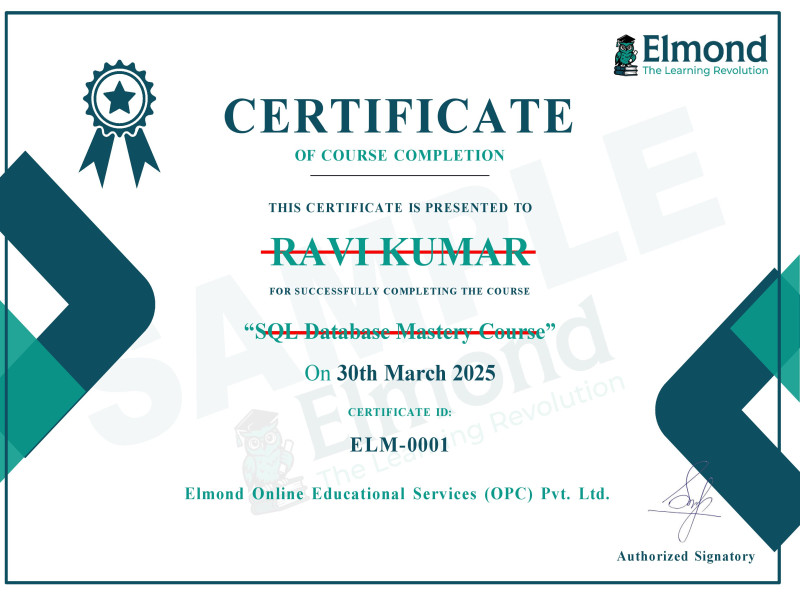
After successfully completing the course, learners will receive a Course Completion Certificate that validates their SQL database knowledge and practical skills.
The certificate demonstrates that the learner has successfully completed training in:
• Database Fundamentals
• SQL Query Writing
• Data Filtering and Management
• SQL Joins and Subqueries
• Database Table Management
This certificate can be used to showcase SQL skills in resumes, job applications, and professional profiles.